If cars can drive themselves,why are you still
filling out spreadsheets?

You’ve built a business on knowing what to do.
Imagine having the day to do it.

Start with what’s getting in the way. We’ll start by asking why.

We help construction, building materials and design businesses find what’s slowing them down—and build a better way to work. The answer starts with understanding the business. The technology follows.

Good businesses.
Better questions.

A quote, a customer conversation, a proposal. Look closely enough, and the everyday work tells you where to intervene.

Jura Plank

Building materials

The problem

The founder knew how to sell the floor. Collecting the details took the time. Each quote meant chasing specifications across emails, drawings and spreadsheets. More follow-up would have meant more of the same.

What we did

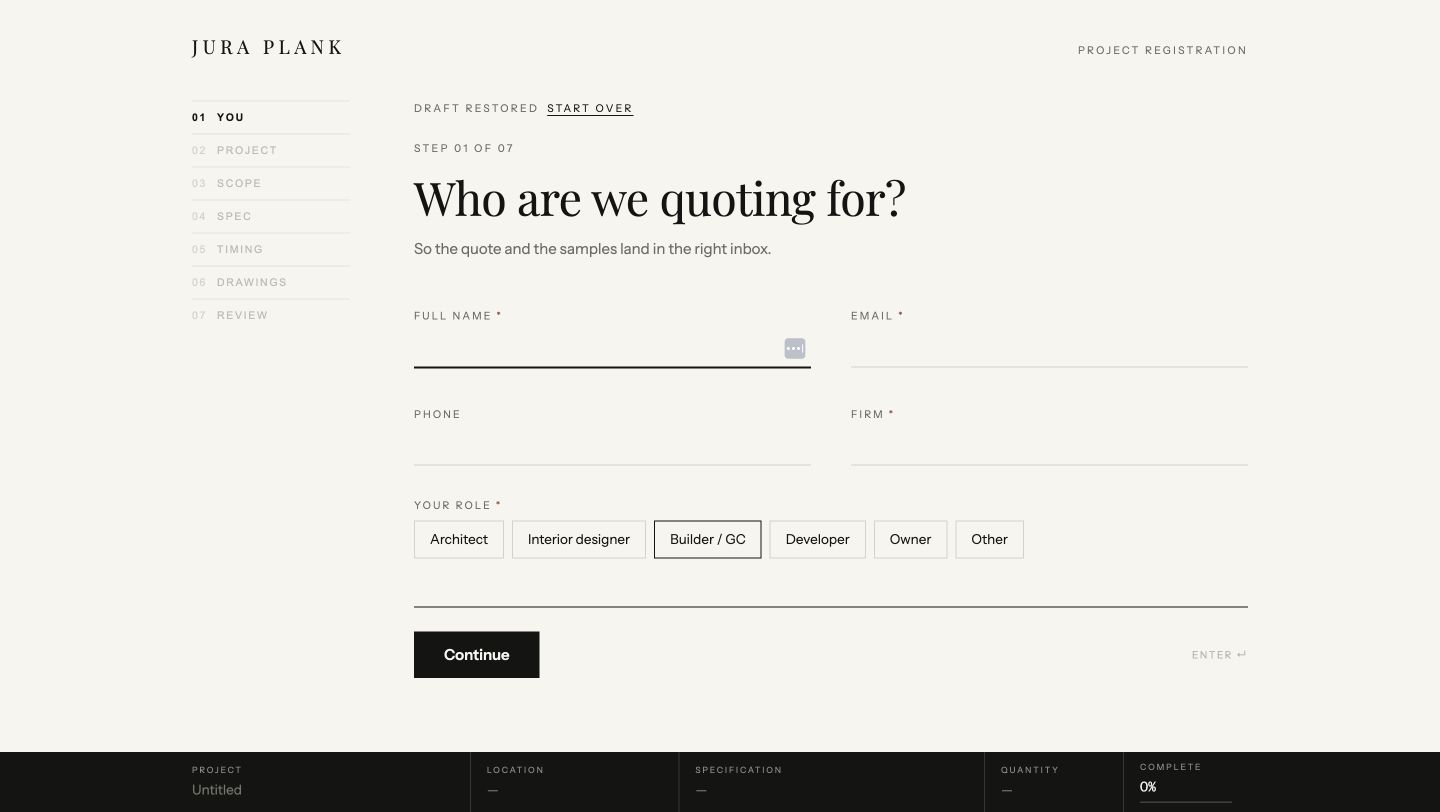
Changed how the information arrives. A guided, seven-step project registration collects the specifications; Close CRM organizes them for the team. Fix the starting point, and there is less to chase.

Business outcome

A clearer starting point for every quote, designed to give the founder more room to sell. The opportunity is time redirected toward customers and new business.

432 hours / year

Founder time potentially saved

US$38,880 / year

Potential savings in time value · US$90/hour

Jura Plank project registration prototype: first of seven steps, collecting the person and company details for a quote.
Jura Plank — project registration prototype

Explore the case ↗

Mistiva

High-end lighting studio · Miami

The problem

Customers see one lighting studio. The team had to look in several places. Orders, advertising and support told separate stories, making both customer care and commercial decisions harder.

What we did

Built iSynq for Mistiva to bring business performance, attribution and customer context together. The CRM migration extends that shared view to the conversations happening across the business.

Business outcome

A shared view of the business, built around one continuous customer experience—from first question to aftercare. The care behind the lighting should carry through every conversation.

US$130K / month

Lighting studio revenue

10+ calls / day

Showroom inquiries

One customer history

CRM migration in progress

Explore the case ↗

M2Develop

Yacht interiors · Florida

The problem

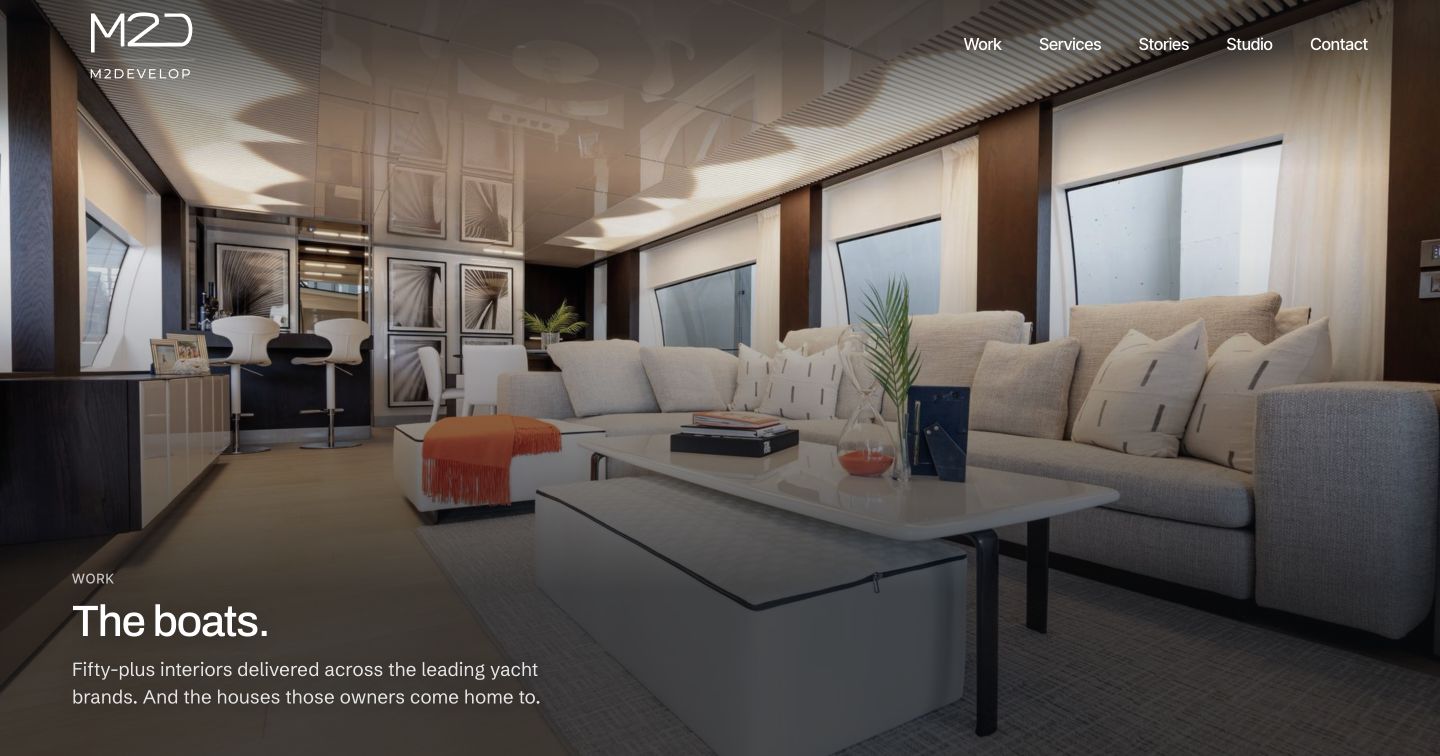
The work belonged on exceptional yachts. Its presentation did not do it justice. Owners, brokers and shipyards needed a clearer way to understand what Ryan and his team could deliver.

What we did

Built the commercial website around the work buyers need to see, with search foundations and CRM and email integrations to support what happens after the first visit.

Business outcome

A commercial asset worthy of the work: a clearer presentation for the people commissioning it, and a foundation for ongoing communication.

~10 projects / year

Yacht interior projects

Owners · Brokers · Shipyards

A commercial presentation for the people who commission the work

M2Develop — commercial website

Explore the case ↗

TRAZZO LIGHTING / Karen Mannheim

Lighting design · Residential, commercial & hospitality

Led by Karen Mannheim, TRAZZO collaborates with Robert A. M. Stern Architects, Kobi Karp and Debora Wecselman Design.

The problem

The lighting required judgment. The proposal looked like a supply list. Preparing a new pitch could take the team two or three days, assembling PowerPoint, Word and Excel files that left too much of the thinking unexplained.

What we did

Designed a reusable digital presentation system that connects the project brief, lighting intent, scenes and scope. A way to show the reasoning behind the recommendation—before asking the client to evaluate the price.

Business outcome

The expertise becomes part of the pitch. Clients can see how the studio thinks, what the lighting will bring to a space and why each recommendation belongs. A presentation that gives the design its full value before the conversation turns to price.

2–3 days / proposal

Proposal preparation before the system

US$75K–350K

TRAZZO lighting project fees

Lighting design proposalIllustrative demonstration

One room.
More than one way to live.

A useful proposal makes a decision easier. Start with how the room is used, then explain what the light needs to do.

The design question

How can the same space support focused work, conversation and a quieter end to the day?

A focused pool of light supports the task. Gentle ambient light keeps the surrounding room comfortable.

From intent to scope

Lighting layout

Fixture specification

Control scenes

Coordination

TRAZZO LIGHTING — presentation system · anonymized demonstration

Explore the case ↗

Built for the decision-maker.

nata.

Business diagnostic / Illustrative example

Where the
work stops.

Finding 01 / Illustrative

The quote waits
before anyone starts.

Missing project information creates repeated follow-up before the team can prepare a useful response.

First intervention
Standardize the information required at intake.

Measure
Completeness at first submission, preparation time and rework.

Owner
Sales lead. Baseline agreed before implementation.

The NATA sprint

Start small.
Start with one
business problem.

01

First conversation

Speak with an owner or decision-maker about priorities, friction and business impact.

Complimentary. Establish fit and the next step.

02

Focused diagnostic

Listen to the people doing the work. Agree the first improvement, an owner and a practical measure of success.

Scope and commercial terms agreed before work begins.

03

The 90-day sprint

Implement, test with the team, refine and document. Review the evidence together as the work develops.

One focused starting point. Regular reviews. A clear decision about what comes next.

04

Ongoing care

Maintain the systems, support the team and agree further improvements as needed.

Separately scoped and priced.

A considered investment

Make room for
better work.

US$8,000 / month, from

90 days · US$24,000 minimum

Direct work with the founders. Diagnosis, a focused implementation, team adoption and progress reviews within an agreed scope.

Let’s establish fit ↗

We’re a good fit if you…

  • Run an established business with a recurring problem that costs time, capacity or customer confidence.
  • Can give one accountable owner and the people closest to the work room to participate.
  • Want to start with a useful improvement, measure what changes and decide from evidence.

Agree the impact before the work.

We establish a baseline: preparation time, rework, response quality or another measure that matters to your business. We review what improves, what does not, and what the team can sustain.

Time released creates capacity. Cash savings only exist when spending falls. The business case should make that distinction clear.

Notice. Ask. Think. Act.

The friction
is a clue.

Before we make a task faster, we ask why it needs doing that way.

Sales

Is the team slow to follow up—or missing what it needs to move the conversation forward?

Customer support

If customers keep asking the same question, where should the answer have appeared?

Operations

Is another tool needed—or a clearer handoff, responsibility or source of information?

Executive support

Which decisions need your judgment? Which reach you because nobody knows who owns them?

Not every bottleneck
needs another subscription.

Sometimes the answer is a clearer offer, better communication or a different process. Sometimes it is technology. We work with the people closest to the problem—and keep what already works.

Our point of view / Fritjof Capra

See the whole.
Find where to begin.

A change in perception.

Fritjof Capra’s The Turning Point (1982), known in Spanish as El punto crucial, helped frame an idea that resonates with us: how we see a problem shapes the answers we can imagine. The book explores a shift in worldview across science and society. His later work develops a systems view of life, grounded in relationships, patterns and context.

In that view, a living system cannot be understood through its parts alone. Its organisation emerges through their relationships. Feedback, communication and learning matter.

Further reading: The Turning Point · Principles of life

From that idea to everyday work.

For NATA, this becomes a practical way to enter a business. A delayed quote may begin with missing information. A support problem may start with a promise made in sales. We listen across those boundaries before deciding where to act.

Our creative background brings another habit: noticing relationships that are easy to overlook. Discovery comes through attention and conversation. A shared understanding makes a different decision possible.

We call that moment the point of change. Then we build one useful improvement with the people who will live with it, observe its effects and refine it.

The nata. point.

A relationship
made visible.

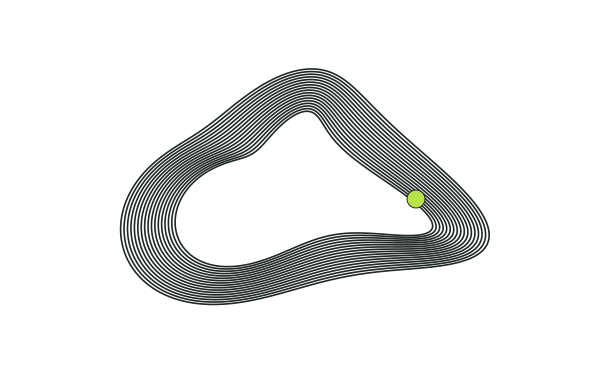
Our visual language gives that idea a form. Different contours create a shape that no single line describes. The open centre leaves room. The citron point marks a discovery within the whole.

The lines continue. The point is a place to begin, and the work keeps learning.
Partners

Two perspectives.
Shared responsibility.

Fran Herrera

Fran Herrera

Co-founder, Strategy & Operations

Understanding the business, finding the right question and turning it into a practical way forward.

AK

Aleksey Korsakov

Co-founder, Engineering & Design

Turning that understanding into systems that work for the people who use them.

nata.

Notice what others miss.

A better place to begin

What changes
when you ask
a better question?

Tell us what keeps coming back to your desk. We’ll listen, look closer and work out the next useful step together.